
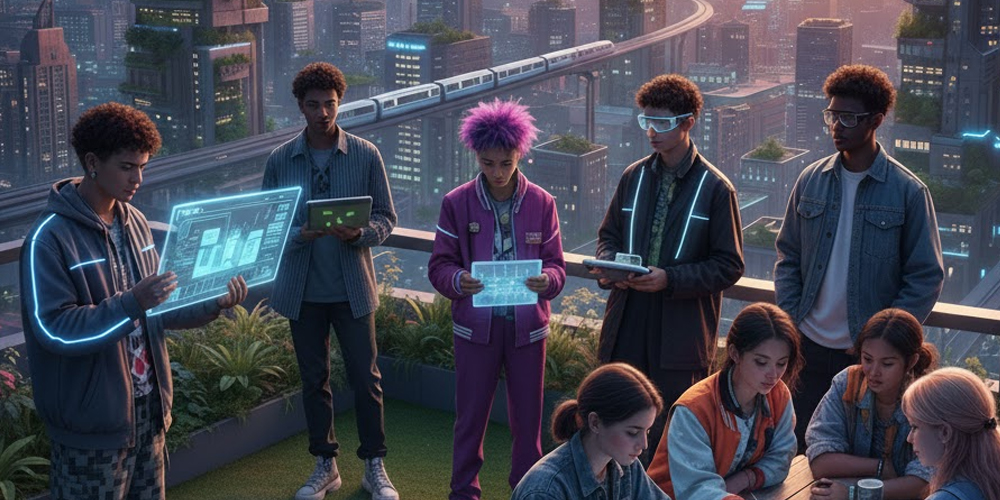
Every era carries a distinct rhythm, a beat that defines its people, their aspirations, and
their struggles. The 1960s hummed with rebellion, the 1980s pulsed with consumerism,
and the 2000s echoed with globalization. But the 21st century has welcomed a
generation whose song is unlike any heard before Generation Z. Born roughly between
the late 1990s and the early 2010s, they are digital natives, social reformers, and bold
thinkers who are redefining how the world works, communicates, and dreams.
Generation Z is not just another demographic group, they are a transformative force
reshaping culture, technology, and identity itself.
Unlike millennials who remember dial-up internet, Gen Z has never known life without
Wi-Fi. For them, a smartphone is not a gadget but a lifeline. They scroll, create, and
communicate faster than any generation before. Platforms like TikTok and YouTube are
their classrooms, stages, and newsrooms. Charli D’Amelio, who went from posting
casual dance videos to becoming a global celebrity, shows how Gen Z turns creativity
into influence in record time. For them, virality is not luck, it’s a skill, whether that’s
dropping a dance challenge, a “fit check,” or the perfect “aesthetic” reel.
This generation isn’t afraid to speak up. They demand justice, equality, and
sustainability and they do it loudly. Whether it’s climate activism, gender equality, or
racial justice, Gen Z doesn’t wait for leaders; they become the leaders. Greta Thunberg,
who began as a lone protester outside her school, sparked a worldwide climate
movement. Similarly, Gen Z’s use of hashtags like #BlackLivesMatter and
FridaysForFuture proves they can turn social media into a megaphone for global
change. When something’s not right, they don’t just rant, they cancel it.
Growing up during recessions and uncertainties, Gen Z knows that job security is
fragile. Instead of waiting for opportunities, they create them. They are side hustlers,
freelancers, and startup founders. A 17-year-old today might be flipping thrifted clothes
on Depop, designing AI art filters, or running a dropshipping store. To them, having a
“side hustle” is as normal as having homework. If millennials dreamed of a 9-to-5, Gen
Z is all about that “boss energy” building brands before they even graduate.
Generation Z has been shaped by crises in ways no other generation has. From the
COVID-19 lockdowns that moved classrooms onto Zoom and friendships onto screens,
to the turbulence of economic recessions, and even political tensions and wars such as
the Indo-Pak conflicts, Gen Z has learned resilience early. Instead of being paralyzed by
uncertainty, they adapted turning bedrooms into offices, hobbies into hustles, and social
media into lifelines. During the pandemic alone, countless Gen Z teens launched online
businesses, ran tutoring platforms, and built digital communities. These experiences
gave them a survival instinct that makes them flexible, innovative, and unafraid to face
the unpredictable future.
Another remarkable aspect of Gen Z’s learning journey is the rise of platforms like
ChatGPT and other digital resources that have transformed how we seek knowledge.
Speaking from personal experience, I used to hesitate in classrooms, fearing that if I
asked a “silly” question, the teacher might scold me or judge my ignorance. Countless
students silently suffer from the same fear, suppressing their curiosity. But now, with
tools like ChatGPT, that barrier has disappeared. We can ask any question, no matter
how small or complex it is and receive patient, clear explanations, often simplified “like
we are little kids.” This freedom not only builds confidence but also encourages us to
embrace curiosity without shame, making education more personal, accessible, and
empowering for an entire generation.
For Gen Z, diversity is not a special cause, it’s simply normal. They embrace cultural
differences, challenge stereotypes, and celebrate individuality. This generation prefers
authenticity over perfection. Fashion trends like oversized hoodies, thrift shopping, and
gender-neutral lines are driven by Gen Z’s rejection of rigid rules. If something doesn’t
match their vibe, it’s simply “not giving.” They live by “you do you,” which is why their
feeds are a mix of K-pop playlists, anime fan art, thrift hauls, and memes all coexisting
effortlessly.
While older generations treated mental health as a taboo, Gen Z wears honesty like a
badge of honor. They openly talk about anxiety, burnout, and the pressures of online
life. Celebrities like Billie Eilish and Shawn Mendes have candidly shared their mental
health journeys, inspiring millions to say, “It’s okay not to be okay.” On TikTok, therapy
memes, “burnout humor,” and self-care routines are part of everyday content. Unlike the
past, where silence was strength, Gen Z knows vulnerability is the real flex.
Gen Z’s superpower technology also comes with its challenges. They are the most
connected yet sometimes the loneliest generation. Constant exposure to curated
“highlight reels” can spark self-doubt. But here’s the twist, they don’t hide from it.
Instead, they drop unfiltered “photo dumps” and proudly embrace their “main character
energy,” reminding the world that imperfection is beautiful too.
From memes to music, from slang to style, Gen Z sets the pace. What they wear, say,
and share becomes mainstream overnight. Their vocabulary, whether it’s calling
something “fire,” giving someone “rizz,” or labeling a vibe “iconic,” shapes modern
language itself. Unlike older generations who consumed culture, Gen Z creates it,
remixing trends into something entirely their own.
What truly sets Gen Z apart from both their seniors and the upcoming Gen Alpha are
three defining attributes. First, they turned cancel culture into a powerful form of digital
accountability, holding even celebrities, corporations, and governments answerable in
real time. Second, they normalized the idea of side hustles as a primary identity, where
building small businesses, freelancing, or monetizing creativity is seen as just as
important as formal education. And third, they brought mental health into the
mainstream conversation, transforming what was once taboo into a daily dialogue
across social platforms, schools, and workplaces. These qualities not only distinguish
Gen Z from other generations but also prove how their influence reshapes the world at
its core.
Generation Z is often misunderstood and dismissed as screen-addicted or overly
sensitive. But stereotypes fail to capture their essence. They are a generation of
creators, challengers, and connectors. They shape technology rather than being shaped
by it. They question the outdated and demand the impossible. And most importantly,
they do all of this unapologetically young. If history remembers every generation by its
defining trait, then Generation Z will be remembered not for following trends, but for
creating them and changing the world along the way.
Written By:
Warisha
XII OHK Section